
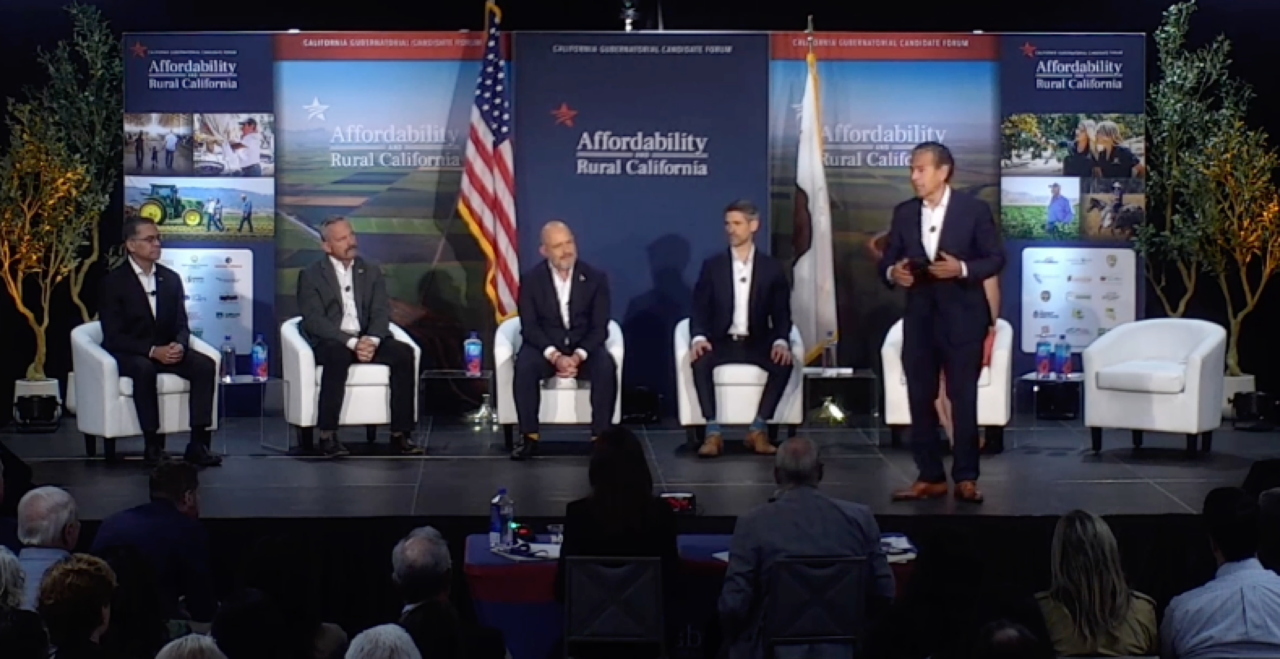
Political agreement is rare. What happened this week at Fresno State demands attention.
On April 1, 2026, Republican and Democratic candidates for governor shared the stage and acknowledged a hard truth: California’s elected leaders got it wrong. The Legislature and the Governor enacted a law that is now hurting the very farmworkers it was supposed to help.
That kind of consensus is unusual. It signals something undeniable. The damage is real, measurable, and no longer defensible.
Assembly Bill 1066, backed by the United Farm Workers Union, was presented as a way to increase wages by changing how overtime is calculated in agriculture.
Farmers and farmworkers warned of what would happen. They asked the state to reconsider. Those warnings were ignored. Once the law took effect, the outcome was exactly what they had feared.
A UC Berkeley study confirmed it: the law “is not benefiting the workers it intended to protect.” Farmworkers’ take-home pay dropped by about 30 percent. Hours were cut. Work became less available. Paychecks shrank.
The individuals and organizations who pushed for AB 1066 misunderstood the nature of the work.
Agriculture does not follow a fixed schedule. Crops don’t wait for an eight-hour workday. Harvests occur when they are ready, driven by weather, timing, and risk. When a crop is ready, every hour counts. When it isn’t, there might be no work at all.
For generations, California understood that reality. Farmworkers could work longer hours during peak seasons, not as a loophole, but as a lifeline. Those weeks of intense work made it possible to earn enough to support their families through the rest of the year.
AB 1066 broke that system.
The consequences are real and tangible. They show up in kitchens and on bills. Families are choosing what to delay and what to go without. Rent, groceries, utilities, and medical care. Workers are earning less when they need to earn the most.
That is why the moment at Fresno State matters.
When leaders from both parties agree that a policy has failed, the question is no longer who supported it. The real question is whether anyone is willing to fix it.
Other states faced the same issue and responded with more care. Oregon and New York combined overtime changes with tax credits to protect workers’ income and keep jobs safe. California did not. Farmworkers here are paying the price for that choice.
There is no reason to allow this to go on. Each delay increases the damage.
The responsibility clearly rests with the Legislature and the Governor. They made this decision and have the power to correct it. Admitting a mistake isn’t a weakness; refusing to fix it is.
The path forward isn’t complicated. Restoring hours, safeguarding earnings, and aligning policy with the realities of agricultural work are essential.
Farmworkers are not requesting new promises. They are urging the state to fulfill its commitments.
Hector Barajas is a public affairs and strategic communications professional and the founder of Amplify360, Inc. His work places him at the forefront of high-level policy discussions involving lawmakers, political candidates, regulators, and industry leaders. These articles aim to illuminate information, context, and implications that are often discussed privately and frequently left out of the public debate.