
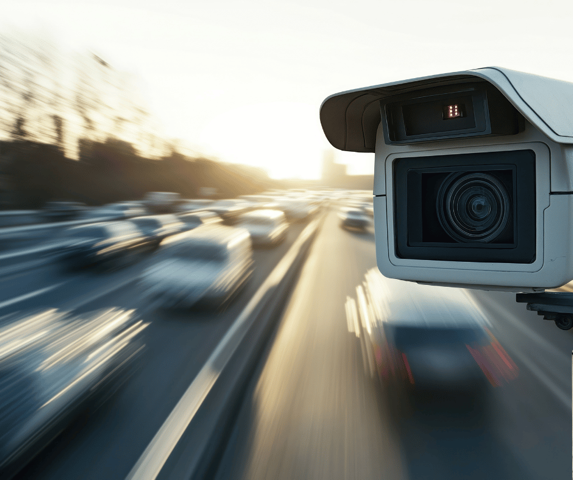
As Los Angeles and other California cities move to install speed cameras, the public should understand one thing: once these systems are in place and generating revenue, they will be very hard to roll back.
California authorized speed enforcement cameras through a five-year pilot under Assembly Bill 645, signed in 2023 and taking effect in 2024. The law allows cities, including Los Angeles, San Jose, Oakland, Glendale, Long Beach, and San Francisco, to issue automated citations to drivers who exceed posted speed limits.
The stated goal is straightforward. Cameras capture license plates, not faces, and are meant to reduce dangerous speeding and save lives. The data suggests they work. Studies show speeding can drop by as much as 82 percent, with fatal crashes reduced by up to 71 percent.
But the real question is not whether cameras reduce speeding. It is what happens next.
Once cities build the infrastructure to track vehicles and issue automated tickets, the pressure to expand that use will grow. Could these systems be used to identify cars involved in street takeovers? To track vehicles tied to other crimes? The law is narrow, but the technology is not.
There is also the issue of discretion. A camera does not consider context. It cannot recognize emergencies or road conditions. It records a violation and issues a fine, leaving the driver to contest it afterward. Essentially, the system becomes the accuser, the witness, and the enforcer.
Then there is money. When ticketing increases, so does revenue. Other cities have seen citations spike after cameras were installed. That creates a built-in incentive to keep the system in place and expand it, whether or not driving behavior continues to improve. Officials should be honest about this. These programs are not only about safety.
Supporters argue that automation frees officers to focus on more serious crimes. That may be true at the margins, but cameras should not replace a police presence in the community.
California is beginning a shift that will be hard to reverse. Once these systems become widespread and generate substantial revenue, they will influence enforcement and public expectations for years to come.
Hector Barajas is a public affairs and strategic communications professional and the founder of Amplify360, Inc. His work places him at the forefront of high-level policy discussions involving lawmakers, political candidates, regulators, and industry leaders. These articles aim to illuminate information, context, and implications that are often discussed privately and frequently left out of the public debate.
X: @HectorMBarajas
LinkedIn: www.linkedin.com/in/hectormbarajas