
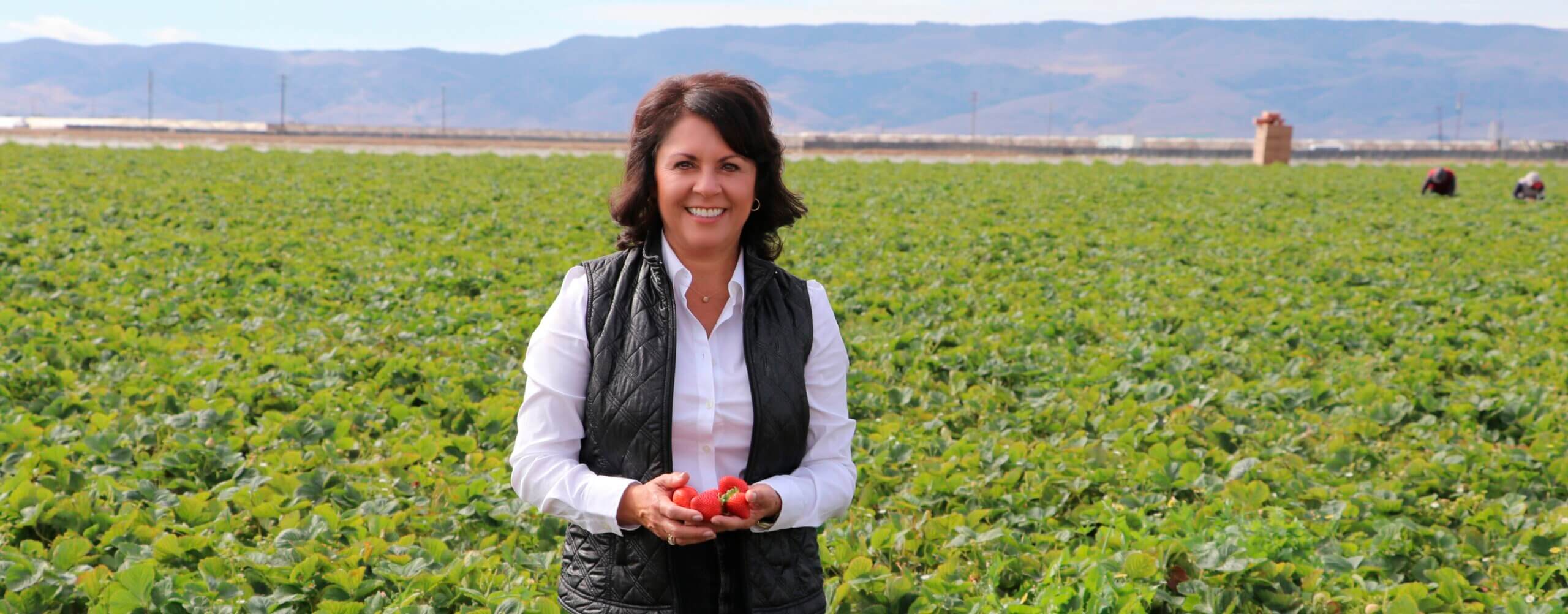
By Lorena Chavez, Second-Generation California Strawberry Farmer
Mother’s Day, for me, begins in the fields.
Before the sun rises, before the first berry is picked, I think about my mother.
She didn’t start as a farmer. She started as a farmworker—working long days in the fields, learning every row, every plant, every season. She carried more than tools in her hands. She carried a vision: that one day, her family could build something of their own.
That vision became our farm.
Because of her courage, I grew up not just watching agriculture—I grew up inside it. I learned that farming isn’t just about growing food. It’s about sacrifice. It’s about resilience. It’s about believing that your children can go further than you did.
Today, as a second-generation strawberry farmer, I carry that legacy forward. Our family farm now helps support thousands of workers and their families. And this year, I was honored to be recognized as part of the International Year of the Woman Farmer—a recognition I share with my mother, and with so many women whose stories look like ours.
Because across California, this story is not unique.
It is the story of women who began in the fields and rose to lead. Women who turned hard work into opportunity. Women who built farms, businesses, and communities—often without recognition.
It is a story rooted deeply in our Latino community.
California grows nearly 90 percent of the strawberries in the United States. But behind that number are people—families like mine. Workers, many of them Latino, whose skill and dedication bring this fruit from the soil to tables across the country.
Strawberries are part of our celebrations. They’re on our tables at birthdays, holidays, and especially Mother’s Day— chocolate dipped, blended into smoothies, shared in desserts, or simply enjoyed fresh.
They are sweet, yes. But they are also symbolic.
Behind every strawberry is a story of life, passion, energy, sacrifice, courage, and care.
Of mothers who wake up early and come home late.
Of families who work side by side.
Of communities that depend on agriculture not just for jobs, but for identity and pride.
That’s why this Mother’s Day means something more to me.
It’s not just about honoring mothers at home. It’s about honoring the women in our fields, our farms, our research labs, and our businesses—women who lead, who mentor, who innovate, and who make this industry stronger for the next generation.
Women like my mother.
Women who turned opportunity into legacy.
As we celebrate this Mother’s Day, I invite you to look beyond the plate. When you see strawberries on your table, remember where they come from—and who made them possible.
Support the farmers. Support the workers. Support the families.
Because when you support California strawberries, you are supporting a community built on hard work, heritage, and hope.
And for many of us, you are honoring the very women who made our dreams possible.
***
Women Farmers Are Shaping the Future of California Agriculture
https://www.californiastrawberries.com/international-year-of-the-woman-farmer/
Meet Lorena Chavez: https://www.youtube.com/watch?v=zRAn1aE4G4s&t=85s